



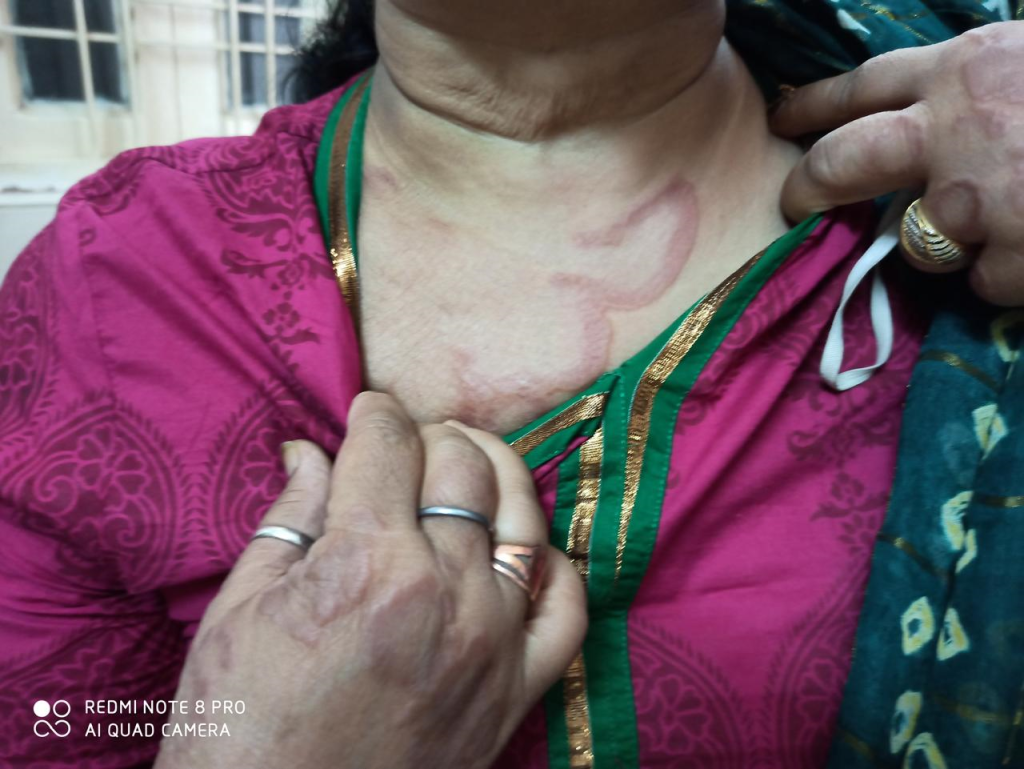
What is Ringworm?
- Definition: Ringworm (tinea) is a contagious fungal infection of the skin, hair, or nails caused by dermatophytes (e.g., Trichophyton, Microsporum). Despite the name, it’s not caused by a worm.
- Appearance: Circular, red, scaly patches with raised borders and a clearer center, resembling a ring. It may itch or burn.
- Common Sites: Scalp (tinea capitis), body (tinea corporis), feet (tinea pedis/athlete’s foot), groin (tinea cruris/jock itch), or nails (tinea unguium).
Causes
- Fungal Pathogens: Dermatophytes thrive in warm, moist environments.
- Transmission:
- Direct skin-to-skin contact with an infected person or animal (e.g., pets).
- Contact with contaminated surfaces (e.g., towels, floors, gym equipment).
- Poor hygiene or excessive sweating increases risk.
- Risk Factors: Living in humid climates, sharing personal items, or having a weakened immune system.
Symptoms
- Red, scaly, ring-shaped patches that may itch or burn.
- Scalp ringworm: Bald patches, scaling, or pustules.
- Nail ringworm: Thick, discolored, or brittle nails.
- Can spread to multiple areas if untreated.
Diagnosis
- Clinical Examination: A dermatologist identifies the characteristic ring-like rash.
- Tests:
- Skin scraping under a microscope (KOH test) to detect fungi.
- Fungal culture or Wood’s lamp exam for certain species.
- Differential Diagnosis: Must be distinguished from eczema, psoriasis, or leucoderma (vitiligo), which lacks scaling and itching.
Treatment
- Topical Antifungals (for mild cases):
- Creams or ointments like clotrimazole, miconazole, or terbinafine applied for 2–4 weeks.
- Available over-the-counter or by prescription.
- Oral Antifungals (for severe or scalp/nail infections):
- Medications like griseofulvin, terbinafine, or itraconazole, taken for weeks to months.
- Prescribed by a doctor due to potential side effects (e.g., liver issues).
- Home Care:
- Keep the area clean and dry.
- Avoid scratching to prevent spread or bacterial infection.
- Wash bedding, towels, and clothing regularly.
- Duration: Symptoms often improve within days of treatment, but completing the full course is essential to prevent recurrence.
Prevention
- Maintain good hygiene: Shower after sweating, dry skin thoroughly.
- Avoid sharing towels, combs, or clothing.
- Wear loose, breathable clothing and sandals in public showers or pools.
- Treat infected pets promptly.
- Disinfect surfaces in high-risk areas like gyms.
Complications
- Secondary bacterial infections from scratching.
- Permanent hair loss or scarring in severe scalp cases.
- Chronic nail damage if untreated.
Ringworm vs. Leucoderma
Since you previously asked about leucoderma, here’s a quick comparison to avoid confusion:
- Ringworm: Red, scaly, itchy, ring-shaped patches caused by fungi. Treatable with antifungals.
- Leucoderma/Vitiligo: White, non-itchy, depigmented patches due to melanin loss. Not contagious, managed with phototherapy or steroids, not curable.
- Ringworm is often mistaken for other rashes, but leucoderma’s lack of scaling or itching sets it apart.
When to See a Doctor
- If over-the-counter treatments fail after 2 weeks.
- If the rash spreads, involves the scalp/nails, or shows signs of infection (pus, swelling).
- For children or immunocompromised individuals, as oral medications may be needed.
